Lately, I’ve been telling tales of grief. And this week’s story is no different.
It’s the ancient Sumerian myth of Inanna, Queen of Heaven and Earth, a tale that originates from ancient Mesopotamia. I first encountered this story in one of my prenatal yoga training books and have since heard and read several versions. I’ve even shared it in my classes before, most recently back in March.
But isn’t it interesting how we can return to the same story, the same book, the same piece of music, and discover something entirely different depending on where we are in our own lives?
As Matt and I were walking through the woods on Saturday, he asked me, “What is it that interests you so much about this story?” after hearing me ramble on about it in class two days in a row.
I’ve always been drawn to Inanna’s courage. Her willingness to embark on a journey most of us would never willingly take, knowing that no one returns from the underworld as they were before. And if she manages to come back, she will be completely transformed, with no idea who or what she might become.
And that, my friends, has always gotten me. She willingly walks into the fire.
But this time, it wasn’t Inanna who stayed with me. It was the grief of her sister, Ereshkigal, Queen of the Underworld, and what happened when that grief was finally witnessed.
But I’m getting ahead of myself. Let’s begin at the beginning.
In this retelling, Inanna hears the grief-stricken wails of her sister calling from below, calling from within. And so she prepares for the journey ahead, adorning herself with her crown, finest garments, protective armor, and opulent lapis lazuli necklace. She is ready, confident, a woman who knows what she wants and believes she is prepared.
Or so she thinks.
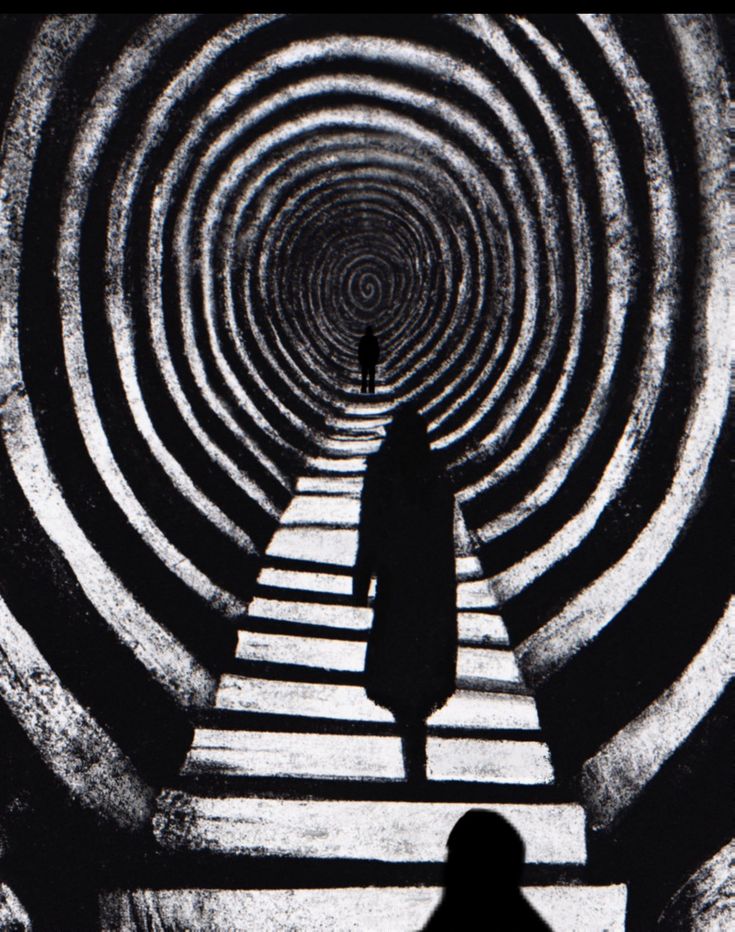
As she enters the underworld, she must pass through seven gates. At each one, something is taken from her: her crown, her jewels, her garments, the very things that symbolize her identity and power. Until finally, she is stripped bare, humbled, and vulnerable, crawling through the darkness, unsure of up from down, right from left, or in from out.
When she finally arrives before her sister, Ereshkigal takes one look at Inanna and casts the eye of death upon her. Inanna immediately dies, and her lifeless body is hung on a meat hook to rot.
Thankfully, Inanna had a plan. Before leaving, she instructed her bestie, Ninshubur, to seek help from the gods if she failed to return within three days. After several unsuccessful pleas, Enki, the god of wisdom, finally agrees to help. He takes the dirt from beneath his fingernails and creates two tiny mythical creatures, sending them down into the underworld to retrieve Inanna.
When they arrive, they hear Ereshkigal moaning, crying, and wailing in agony.
“Oh, oh, my insides hurt!” she cries.
“Oh, oh, your insides hurt!” they respond.
“Oh, oh, my body!”
“Oh, oh, your body!”
“Oh, oh, my heart!”
“Oh, oh, your heart!”
And on and on it goes.
These two little creatures simply mirror Ereshkigal’s pain and suffering. They don’t try to fix it, change it, explain it away, therapize it, or swallow it. They don’t tell her to look on the bright side or remind her that everything happens for a reason. No, they simply witnessed her pain.
And this act of being seen, of having her suffering acknowledged without judgment, moves Ereshkigal so deeply that she offers them anything they desire. The mountains, the waters, the lands. Anything. But they refuse her riches. All they want is Inanna.
And so Ereshkigal grants their request. The creatures sprinkle the food and water of life upon Inanna’s lifeless body, and she is resurrected.
Now, there is much more to this story. Inanna’s ascent, the consequences of her return, and the transformation that follows. But this time, I couldn’t stop thinking about Ereshkigal. The grieving sister. The angry sister. The shadow self sister. The one who had been living in the darkness all along.
Last week, after sharing my own experience of grief, anger, and a difficult confrontation with my mother, so many of you reached out. Some offered hugs, others shared their own stories, and many simply said, “Me too.”
And we all know the inherent power of those two little words, don’t we? Me too. There’s something profoundly comforting about knowing that our experiences, even the painful, messy, complicated ones, aren’t ours alone. That someone else recognizes the ache.
And I think there’s a beautiful parallel to our yoga practice here, too. In many ways, each time we step onto our mats, we willingly embark on our own little descent. We turn inward, into the darker, quieter corners of ourselves. Into the dark seat of the soul. Much like Inanna, we begin to peel away the layers, the expectations, the identities, the stories we’ve collected about ourselves.
Sometimes what we find isn’t particularly comfortable. Grief, anger, fear, or something we haven’t quite found the words for yet. But perhaps the practice isn’t always about changing what we find. Perhaps, like those two little creatures, we can learn to simply witness it, to acknowledge what’s there without immediately trying to fix it or make it into something more digestible.
Because how can we begin to transform something we haven’t first been willing to recognize?
Ereshkigal had her pain acknowledged. The two creatures didn’t rescue her from the underworld. They didn’t take away her grief. They simply let her know that they heard her.
And somehow, that was enough to change what happened next.
Move With Love.
Xoxo,
Holly
Share